Forests do not stand still, and neither does money. The Time Value of Money is where FRASS brings these two moving parts together. It is the lens that lets us compare a dollar earned today with a dollar earned decades from now, in a forest that will not look the same.
In this part of the FRASS system, we are not predicting a single future. We are testing many possible futures and asking a simple question: “Given how forests grow, how markets behave, and how costs change, which choices make sense in time?”
The answer is rarely “wait for the biggest pile of wood.” The answer usually lives at the intersection of growth, risk, price behavior, and discounting. FRASS is built to work at that intersection.
In a forest, value is never just “volume × today’s price.” Trees keep growing, risks keep shifting, and markets keep moving. A schedule that looks profitable in a simple spreadsheet can quietly lose value once you account for:
- Inflation eroding tomorrow’s dollars,
- Real (inflation-adjusted) price changes by species and grade,
- Changing logging, trucking, and management costs,
- And the fact that today’s harvest decision shapes every future rotation on that stand.
The Time Value of Money module in FRASS aligns these elements so each candidate harvest age is evaluated on equal footing: in consistent, discounted terms that reflect real-world conditions.
FRASS treats Time Value of Money as a working engine, not a footnote. The Flex Taper App fuels that engine by grounding every projection in measured, stand-level data collected by foresters in the field. From stump height and crown ratio to merchantable log segments, these biometric records feed the FRASS system through the Flex Taper model—turning field observations into analytic geometry.
Once linked, FRASS combines biometric structure with market behavior:
- Builds growth pathways for each stand into the future,
- Applies Real Price Appreciation forecasts by market, species, and sort,
- Projects costs (logging, hauling, silviculture, management) through time,
- Combines these into thousands of feasible harvest timing combinations,
- Discounts every scenario back to present-day values in a consistent way,
- Identifies harvest timing patterns that maximize value across rotations, not just once.
The process links the Flex Taper App’s precision in tree form with the FRASS model’s financial clarity. Together they deliver a defensible explanation of why a given schedule makes financial sense over the long term— and how small biological differences can reshape the economic horizon of a property.
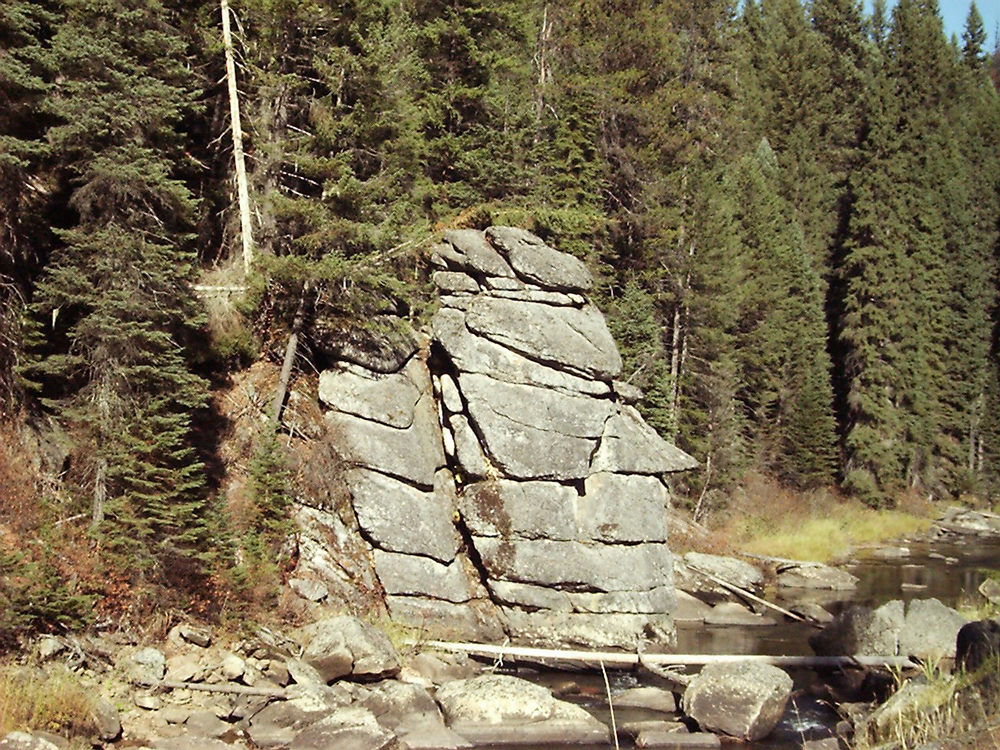
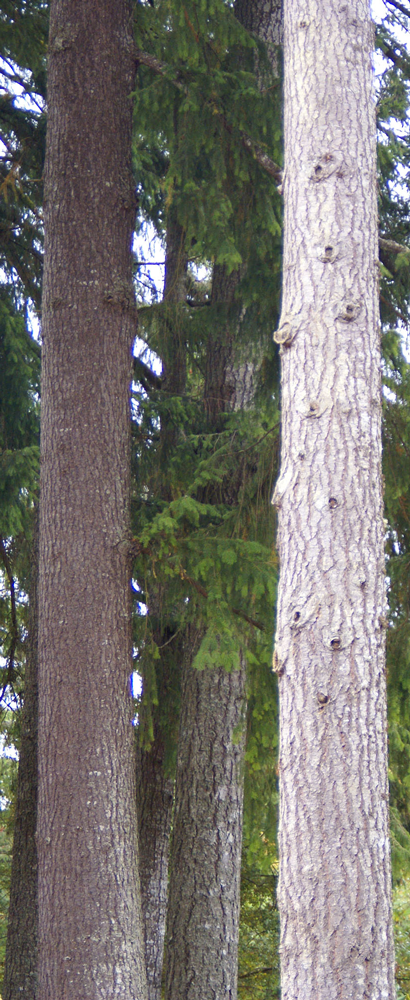
When biometric precision meets time-aware finance, patterns emerge that were invisible before. FRASS expands each decision into a sequence of linked rotations, showing not just what to harvest, but when, why, and how that timing affects future generations of stands.
By extending rotation analysis into perpetuity, FRASS converts impatience—a natural human bias—into a measurable parameter. The result is a model of highest and best use (HBU) that recognizes how land, timber, and time combine to define value. As rotations unfold through centuries of simulated growth and changing markets, the financial horizon stretches, and profitability grows with understanding.
Not every optimal schedule will be the schedule you choose. You may favor wildlife habitat, cultural values, viewsheds, carbon, or community commitments. FRASS helps make those choices explicit rather than vague.
By comparing the financially optimal schedule with an alternative (for example, one that protects key habitat or extends rotation length for visual or cultural reasons), FRASS can estimate the opportunity cost of that decision: the revenue you are intentionally giving up to achieve something you care about more.
When trade-offs are measured, they can be defended. The Time Value of Money in FRASS turns “I think this is better” into “Here is what we chose, here is what it costs, and here is why it is worth it.”
Time-aware analysis does not replace judgment; it informs it. That is as true for students learning forestry as it is for institutional investors responsible for billions.
The Time Value of Money is where FRASS proves its strength: it takes the same data you already collect, layers them through space and time, and shows how better timing, informed by real markets and real constraints, changes the story of value.